It is all about player safety and protecting the integrity of the game. That was the central message coming out of the NFL’s punishment of the four players implicated in the now infamous bounty scandal: Scott Fujita, Anthony Hargrove, Will Smith and Jonathan Vilma. Safety, integrity, fair play — it was like a mantra that ran repeatedly through the nine-page memo the NFL circulated to team owners and the media last month.
Does the NFL really mean what it says about keeping the game so safe and pure? One has to wonder based on one of the latest chapters in the ongoing saga.
It is not so much about the relatively light sentencing the NFL imposed on three of the four alleged ruffians: Fujita with a one-game suspension, Hargrove with two games and Smith with four games; Vilma got a full year suspension for what is seen as his more flagrant involvement. Nor is it about how empty the NFL’s strong words on player safety seem when juxtaposed with the league’s stubborn resistance to the mounting concerns over player head trauma. That is a whole different story.
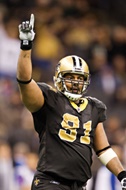 | | 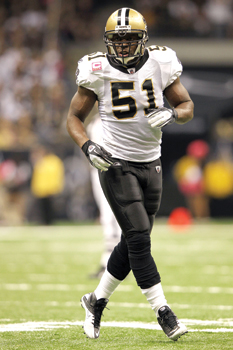 | |  |
From left: Smith, Vilma and Hargrove, and Fujita (below) were suspended by the NFL.
Photos by: GETTY IMAGES
|
What casts serious doubt on the NFL’s true intentions here is how it treated the individual player who may have been singly responsible for bringing this spectacle to light in the first place. Plain and simple, the league hung him out to dry.
There it is for the whole world to see right smack in the center of the NFL’s broadly released memo: former Vikings player Jimmy Kennedy squealed on his buddy (perhaps former chum now) Anthony Hargrove, who apparently confided in him about the bounty program. Of course, Kennedy is denying all of this now. Shortly after the NFL released its memo, he went on a Twitter rampage, vehemently refuting any role as a whistleblower. “THIS DID NOT HAPPEN,” he tweeted emphatically. He
 |
Fujita
|
went even further, impugning the character of anyone who would ever rat out a friend like that: “I have always been a loyal Friend and Teammate,” and “It bothers me that the respect of my Peers and Coaches is in jeopardy because of this.”
And that is really the problem with what the NFL did in exposing Kennedy. They marked him with the scarlet “W” to which a serious stigma still attaches. Despite all the progress that has been made in encouraging whistleblowers to come forward, that old schoolyard sentiment remains that nobody likes a snitch. Just look at the desperate lengths Kennedy has gone to distance himself from any role in exposing this scandal. Better to have been one of the purported bounty hunters seeking the knockouts and cart-offs than to be the one who uncovered it all.
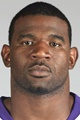 |
| Kennedy |
That is precisely why Congress has gone to such great lengths to provide strong incentives and protections for whistleblowers. There are rules against firing them or otherwise retaliating against them. They are permitted to maintain some measure of anonymity, in some cases forever keeping their identity a secret. And most striking of all, when reporting on government fraud (and certain other types), they can share in up to 30 percent of any government recovery. This can bring in quite the mighty prize. These enticements have only gotten stronger and more widely applied over the past few years. The reason is obvious: Without them, very few are willing to risk the backlash and isolation of blowing the whistle.
Which brings us back to the NFL’s treatment of Kennedy. It was not necessary to identify him by name. The evidence of the bounty program went well beyond anything that might have come out of his or someone else’s initial tip-off. It was a purely gratuitous reference in the background portion of the memo on the NFL’s initial investigation. The strong message this sends to future whistleblowers is that the NFL does not care about your anonymity nor any retribution you may suffer from coming forward. Perhaps the league does not care about or even want to encourage whistleblowers at all. Intentional or not, that is certainly a reasonable takeaway from the NFL’s treatment of Kennedy here. And it will definitely have consequences down the road the next time a player or coach thinks about stepping up to report misconduct within the league.
If the NFL is truly that concerned about player safety and maintaining the integrity of the game, it needs to do a total about-face here. It needs to apologize to Kennedy. It needs to create a formal whistleblower program that will prevent retaliation against, and protect the identity of, those with the fortitude to step forward. And most importantly, it needs to foster an environment where “saying something if you see something” is a badge of honor, not something to run from for fear of losing the respect of your fellow players and coaches. Only then can the NFL truly succeed in reaching its purported goal of protecting the safety and purity of this most hallowed tradition.
Gordon Schnell (gschnell@constantinecannon.com) is a partner in the New York office of the law firm Constantine Cannon, specializing in antitrust, consumer protection and whistleblower law.