San Francisco Giants officials are looking to strengthen their aggressive entry into dynamic pricing after a scorching resale market for World Series tickets set records last week.
Industry sources said more than 10,000 tickets changed hands for last Wednesday’s World Series Game 1 at AT&T Park just on StubHub, MLB’s official ticket resale marketplace. The figure represents just shy of 25 percent of the total stadium capacity.
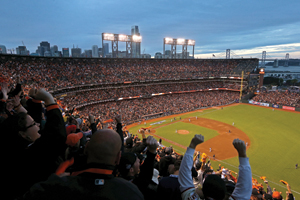 |
StubHub hit a sales milestone the day before Game 1 of the World Series at AT&T Park.
Photo by: GETTY IMAGES
|
With even standing-room-only tickets selling for more than $300 each on the secondary market and StubHub commanding a 25 percent combined fee on every sale, sources said the sales just for the Series opener easily generated more than $1 million in commissions. A portion of the revenue goes to MLB and is distributed among its teams.
Executives at San Francisco-based StubHub declined to confirm the figures because of confidentiality provisions included in its deal with the league. The company did say that Oct. 23, the day before the start of the World Series between the Giants and Detroit Tigers, represented the single largest day of sales in the company’s 12-year history.
The bullish World Series ticket resales, amplifying trends seen in the earlier rounds of this year’s playoffs, have given Giants executives more confidence regarding their efforts in dynamic pricing. Secondary market ticketing directly affects dynamic pricing, because the market-based pricing on the secondary market gives entities such as the Giants additional, valuable data points to feed into the algorithms used for dynamic pricing.
For the past several seasons, the club, with the aid of Texas-based analytics firm Qcue, has changed prices for single-game tickets based on supply and demand. The league expanded the program this year to the league division series and league championship series for the first time, and MLB allowed the Giants to run a limited dynamic pricing test for the World Series.
Dynamic pricing has generated incremental boosts in Giants total ticket revenue of 7 percent to 8 percent a year. The club’s season-ticket base has soared to nearly 30,000 full-season equivalents, up by nearly half in just two years, and will likely be capped for 2013, leaving a quarter of the ballpark at most subject to price changes. But the overall ticket revenue growth figure could still move into double-digit percentages next year, as the pricing model becomes more detailed and dynamic ticketing becomes more accepted.
“I’m really looking forward to all the dust settling on this,” said Russ Stanley, Giants managing vice president of ticket services. “This additional data is immensely valuable, and we’re getting better with the dynamic pricing all the time. We’re still not going too crazy with it, certainly relative to the secondary market. But where we’ve gone up $1, $2 a ticket in the past, we can now maybe think about $5, $10 or $15 for high-demand games.”
San Francisco has long been one of StubHub’s hottest-selling markets in addition to its corporate home, and the 2002 World Series between the Giants and the then-Anaheim Angels represented a turning point in the mainstream acceptance of the secondary market as an important fixture in sports ticketing. About 1 million Giants tickets trade on the resale markets during the regular season, when such activity is more common, representing about a third of the club’s total attendance.
The club’s active sellout streak is at 166 games and counting as of press time, second longest in baseball behind Boston’s active mark of 793 games.