The MLB Players Association is examining several results from the recent first-year player draft that it deemed “unexpected,” providing yet another level of intrigue to one of the biggest changes in its new five-year collective-bargaining agreement with the league.
The revamped draft system, which assigns bonus pools to teams and levies harsh penalties for even minimal overspending, finished its first run earlier this month with $207.9 million in total bonuses. The sum is down 9 percent from a year ago but is still the second largest batch of signing bonuses in league history.
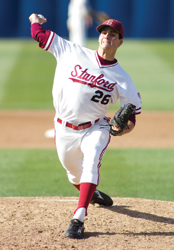 |
Stanford pitcher Mark Appel was the only player picked in the first round this year who did not sign a deal.
Photo by: ICON SMI
|
Among first-round picks this year, 15 signed below league-required slot figures, 10 signed at slot, and five signed above. One player, Stanford pitcher and eighth overall selection Mark Appel, was drafted by Pittsburgh but did not sign.
Union officials declined to elaborate on what precisely they meant by “unexpected” results but indicated that their customary review of the draft has yet to conclusively show that the new draft system worked as intended.
“At first blush, there were some things that were expected, and others that were unexpected,” said Michael Weiner, MLBPA executive director. “MLB gave us a number of objectives they were seeking to meet, and it remains to be seen whether the changes further those objectives.”
The primary outstanding question from this year’s draft is whether the top available talent fully went to the weakest teams, as designed. Agents speaking on the condition of anonymity have suggested for weeks there were numerous instances of clubs and players agreeing to deals before the draft. Similarly, some agents also said they thought the new draft structure’s rigidity served as an obstacle to some deals getting done.
“In the past, all the teams that picked at the top and had the worst record got the players of their choice,” said Scott Boras, Appel’s agent. “In this draft, Pittsburgh wasn’t able to sign the player of its choice.”
Rob Manfred, MLB executive vice president of economics and league affairs, said the league remains pleased with the new system thus far, adding that the Appel non-signing was not necessarily a surprise.
“Every once in a while there will be a player who decides not to sign,” Manfred said. “It happened under the old system and will happen, I think less frequently, under the new system.”
Boras declined to comment specifically on Appel. Manfred also would not comment other than to say, “I am sure that Mr. Appel did what he felt was in his best interests.”
Both the union and the league have shown favor toward the draft’s earlier signing deadline, July 13 this year, as opposed to mid-August in prior years. The earlier deadline is widely seen as helping to get players into minor league clubs sooner, starting their professional development.
Ten of 30 MLB teams overspent their bonus pools, but none hit the 5 percent overage threshold that would trigger the loss of a first-round draft pick next year. Instead, the 10 clubs will pay a 75 percent tax on their respective overages, with those funds going toward revenue sharing.