 |
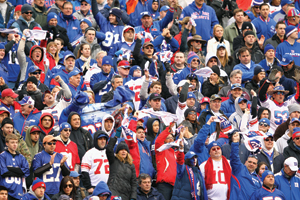
Giants season-ticket holders will pay the same as they did in last year’s Super Bowl season.
Photo by: GETTY IMAGES
|
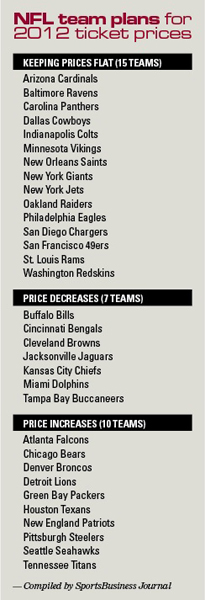
More than two-thirds of NFL teams are lowering or keeping their season-ticket prices flat for 2012, underscoring the moves clubs are taking to ensure their stadiums are filled.
Only 16 of the NFL’s 256 regular-season games last year were not designated by the league as sold out, the lowest such total since 2008, but improving the in-game experience is a top agenda item for the NFL at this week’s annual meeting. It’s become a frequent theme for the league in recent years as teams struggle to woo fans away from deluxe in-home entertainment systems.
Even teams like the Super Bowl-winning New York Giants are keeping prices flat.
“We recognize the commitment our [personal seat license] holders have made to our organization, and we decided against a price increase for this season,” said Giants co-owner John Mara. Every Giants season-ticket holder also had to buy a PSL to get a seat in MetLife Stadium.
While some teams like the Giants, Dallas Cowboys and New York Jets have large PSL contingents as a motivation for keeping prices flat, other clubs are responding to a tougher marketplace. The Tampa Bay Buccaneers, for example, have cut ticket prices now three years in a row. Tampa Bay joins six other teams with average-price reductions for 2012.
Fifteen teams, nearly half the league, are keeping their 2011 prices intact. Of the 10 teams that are raising prices on average, the hike in most cases is minimal and reflects an increase in a small area of seats while the rest of the stadium pricing remains flat. Such is the case with Denver, Seattle and New England.
“It is accelerating,” said one team ticket executive of the number of teams holding the line on ticket prices. Prior to 2010, annual increases were routine, another source said. Now, increases are the minority. “It was the norm: ticket prices going up 7 percent annually,” said this team ticket source, who requested anonymity because he did not want to speak for his organization.
Only two teams appear to be increasing prices by at least that much this year: Detroit (7.9 percent) and Houston (8.5 percent).
The trend of flattening ticket prices is serving in part to restrain league revenue growth for 2012, so much so that player compensation as calculated for the coming season was low enough to trigger a floor provision in the collective-bargaining agreement. With that provision, the players are getting $142.4 million per team this year. Without it, their haul would have been in the $135 million to $140 million range. The salary floor provision expires after next season.