The NFL is battling the NFL Players Association in at least four different courts over where players can file workers’ compensation claims, one of the few unresolved battles of last year’s labor standoff.
Unlike the concussion litigation that has received plenty of attention — there are at least 16 federal lawsuits that have been filed by former players against the league — the workers’ comp fight has the players union playing a prominent role, and it’s a battle that could be played out in courts for years to come. Some observers say the matter could proceed all the way to the U.S. Supreme Court.
Where the NFL's workers' compensation lawsuits stand.
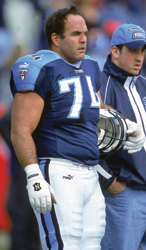 |
Photo by: GETTY IMAGES
|
“Workers have an absolute right, which cannot be waived by a private employment contract, to seek workers’ compensation benefits in those states in which they claim to have suffered injury,” the NFLPA contended in a filing with the 7th U.S. Circuit Court of Appeals earlier this month.
Like the concussion cases, the workers’ comp lawsuits are essentially the same: The players signed contracts binding them to file workers’ comp claims in a jurisdiction designated by the team, and then they chose to file claims in another jurisdiction that they found more favorable, California in most cases.
On workers’ comp matters, California is regarded among the states as one that awards higher damages and allows for more expansive benefits. Teams outside of the state also must incur the cost of local
 |
| Photo by: NEWSCOM |
counsel for filings in California.
The league and players last summer negotiated over workers’ compensation during the collective-bargaining process, but the parties, diametrically opposed on this single issue, agreed to leave the subject unresolved. (Another disputed issue, HGH testing, did make its way into the CBA, though the sides now disagree over how to implement the testing.)
The NFLPA contends federal and state laws do not allow private contracts to take away employees’ rights to file injury claims in places they have worked. The NFL disagrees with that assertion.
“According to the [NFLPA’s] logic, every NFL player is entitled to
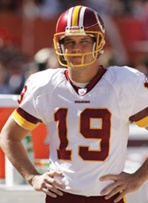 |
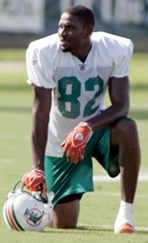
The NFL got mixed results in workers’ comp cases against Bruce Matthews (top), Kendall Newson and Tom Tupa (above).
Photo by: NEWSCOM |
California benefits — even if he played only a few games there and even if he promised to resolve any disputes in the state where his team is located and where his contracts were executed and performed,” the NFL argued to an Illinois federal court on Aug. 12, 2011, just eight days after the union and league signed the CBA. The case involves three former Chicago Bears players who are seeking to file claims in California. “As expected, no statute or judicial decision supports that outlandish theory,” the NFL argued.
Several weeks later, the court ruled in the NFL’s favor, deciding the players must file in Illinois, a decision the NFLPA soon after appealed to the 7th Circuit.
The NFL won a similar victory early last year in a case brought in California federal court by the NFLPA and hall of famer Bruce Matthews. Matthews, who spent the final years of his career with the Tennessee Titans, sought to overturn an arbitrator’s decision that Tennessee law had to be used in the player’s claim even though the claim had been filed in California. The NFLPA and Matthews appealed that loss to the 9th Circuit.
The NFL in a court filing in Louisiana earlier this month cited both the Illinois and California cases as evidence in another case. There, an arbitrator ruled eight former New Orleans Saints players could not file in California, and the league sued the NFLPA and the players in federal court to enforce that decision.
The NFL did not, however, mention in that filing that not every court agrees with the league. In Pennsylvania last May, a federal court ruled in favor of former Miami Dolphins player Kendall Newson, allowing him to file a claim in that state. The team objected, pointing to a provision in Newson’s contract requiring him to file in Florida. The court, unlike the others, disagreed.
“The Pennsylvania Workers’ Compensation Court has concluded, as have others, that private contracts cannot effectively waive the Commonwealth’s statutorily-enacted public policy regarding workers’ compensation benefits,” the court ruled. In other words, if a worker claims an injury occurred in that state, a private contract cannot trump Pennsylvania law granting access to file there.
The Dolphins and the NFL have not appealed the decision.
Similarly, a Maryland state court ruled in 2009, and a state appeals court affirmed last year, that former Washington Redskins punter Tom Tupa could file a case in that state even though his contract stipulated he had to file in Virginia.
“The forum selection clause in Tupa’s contract would contravene Maryland’s public policy,” the state appeals court wrote as part of its decision last year.
Given the many cases, this is an issue that likely will get to the Supreme Court, said John Goldman, a Herrick Feinstein partner.
“If the 7th and 9th Circuits come to a different conclusion, that is one for the Supreme Court,” he said. “It is an important enough issue.”