Shortly after releasing a report detailing rampant drug use and match-fixing across all codes, the Australian Crime Commission "found itself under siege as some of the nation's most prominent sporting identities called on the organisation to back up its claims," according to Brent Read of THE AUSTRALIAN. After the initial shock of the ACC's announcement wore off, "anger became the overriding emotion as the respective sports railed against the tarring of entire codes and athletes." National Rugby League Penrith GM of Football Phil Gould appeared on the Nine Network to "air his concerns." Gould said, "This report from the Crime Commission is full of words like 'may be, could be, suspected and potential.' Nobody has been named, no club has been named and no sport has been named. It's a broad-brush condemnation of Australian sport everywhere." The day culminated in seven-time premiership-winning coach Wayne Bennett "voicing his displeasure at the ACC's handling of the matter." Bennett: "The game is not at fault here -- it's the agencies who started it all (Thursday) and went so public. I don't believe sport has ever been as clean as it is now across all our codes. The allegations didn't come as a shock. What came as a shock was the way we handled it. I just think we handled it very, very badly" (THE AUSTRALIAN, 2/9).
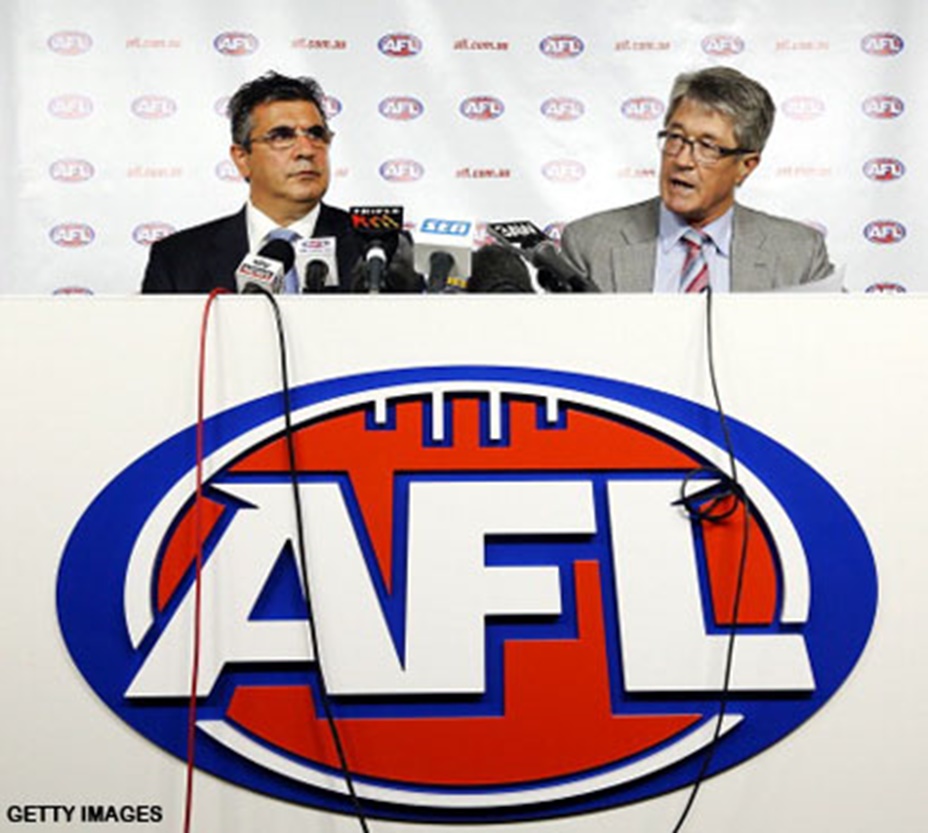
AFL SEEKS NAMES: In Melbourne, Caroline Wilson reported at least seven Australian Football League clubs were named in a confidential briefing to competition chiefs by the ACC as "being vulnerable to illicit drugs." As many as nine AFL clubs have been found by the ACC "to be vulnerable to illicit drug activity and therefore vulnerable to organised crime activity." One of those is Collingwood, whose CEO, Gary Pert, alerted the competition to a ''volcanic'' drug problem in the game late last year (THE AGE, 2/11). Also in Melbourne, Windley & Gullan reported the AFL has sought permission from the ACC to "reveal currently classified details" from the report. The league said that it was "still negotiating with the ACC over what could be released, to whom, and with what conditions" (HERALD SUN, 2/11). In Sydney, Greg Denham reported the AFL has "confirmed a second club is the subject of investigations" into the use of performance-enhancing drugs, but "declined to name the player involved." The AFL confirmed that Essendon was the club with "potential multiple performance-enhancing drug usage," but declined to name one player from another club identified in the ACC's report. It "is not clear" whether the individual at the second club is on a roster this season (THE AUSTRALIAN, 2/11).
'COME CLEAN': BLOOMBERG's Angus Whitley reported Australian PM Julia Gillard "called on sports clubs to disclose any use of banned drugs." Gillard: "Come clean. For clubs that have had problems, it's better off to step forward and be very clear about them" (BLOOMBERG, 2/10). In Melbourne, Murnane & Wilson reported the AFL Players Association will "seek clarification amid concerns that some of its players may have been the direct targets" of phone tapping from the ACC. Justice Minister Jason Clare revealed Sunday that AFL players "might have had their phones tapped" as part of the ACC's investigation. AFLPA CEO Matt Finnis said that he was "not aware of any AFL players being the direct target of phone taps, and would seek clarification" (THE AGE, 2/11). In Melbourne, Samantha Lane reported the ACC is urging domestic sporting code to "enact a landmark rule change that could imprison athletes who lie about doping for up to five years." The Australian Olympic Committee's move, which is "believed to be a world first," would make it mandatory for all future Australian Olympians to "sign a statutory declaration about doping." IOC President Jacques Rogge said that the reform "could be a template" for organizations like the AFL and NRL which have "never demanded athletes declare their doping histories -- with legal implications -- as a condition of competing." AOC President John Coates said, "I would encourage them to look at what we've done, even down at a club level" (THE AGE, 2/9).
NRL WAITS, WORRIES: In Sydney, Brad Walter reported several NRL players are "living in fear" as they wait to learn if they have been caught up in the doping scandal. A number of players, including at least one "big name," are worried they might have taken a banned substance and are "bracing themselves for the fallout" (SYDNEY MORNING HERALD, 2/11). Also in Sydney, Margie McDonald reported NRL clubs "will know within 24 hours whether they are among the six being investigated," and it will be "up to them to decide whether they go public." The NRL expects to have a framework established by Tuesday so clubs can "be fed intelligence information" gathered by the ACC, mainly through telephone taps (THE AUSTRALIAN, 2/11). The AAP reported ACC CEO John Lawler said that he was working with the individual codes to "work out if there was a way for full disclosure to take place." Lawler said that he was "sympathetic to clubs and players that were in the right," but the purpose of the report was intended to be an "alert" to improve safeguards against drug-taking -- a point that he felt "had been missed." It also served as "a trigger for players, coaches and individuals to come forward" (AAP, 2/11).
SCIENTIST SUES: In Sydney, Shand & McDonald reported the man at the center of the scandal, sports scientist Stephen Dank, is launching a A$10M ($10.3M) defamation suit alleging media outlets "have wrongly accused him" of selling illegal performance-enhancing drugs to footballers. Dank's lawyer, Greg Stanton, confirmed he was launching the legal action (THE AUSTRALIAN, 2/11).