Football Federation Australia said that Fox Sports, Foxtel and SBS "will pay A$160 million ($166M) for broadcast rights to A-League and Socceroos int'l football matches over four years," according to Dan Baynes of BLOOMBERG. The agreements, which start July 1, will deliver A$148M in cash and A$12M in marketing support, "double the value of the previous deal on a year-to-year basis." The new agreements, under which one A-League match will be shown on free-to-air TV each week, will boost football’s "profile in a country where it competes with rugby union, rugby league and Australian football for fans and corporate support." Fox Sports will continue as the A-League’s primary broadcaster through June 30, 2017, and will provide exclusive live coverage of all Socceroos matches. Beginning at the start of the '13-14 A-League season, national public broadcaster SBS will show one live match every Friday (BLOOMBERG, 11/18).
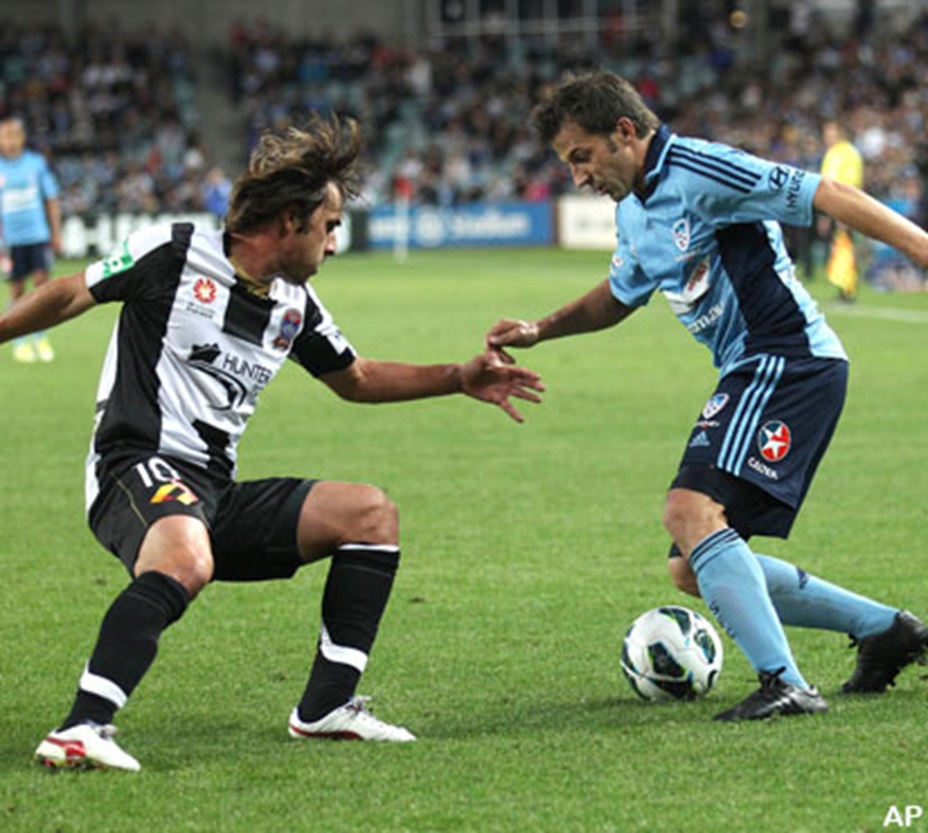
COMING OF AGE: In Sydney, Darren Davidson reported Fox Sports CEO Patrick Delany believes Australian football will "come of age" in the next four years. The price hike "continues a trend toward large amounts being paid for live sport," in the wake of the A$1B-plus, five-year deals for both the Australian Football League and National Rugby League rights. Delany said, "Our position with football has always been one of investment but it performs very well for us as summer sport. In the future, I can see kids kicking around soccer balls on the beaches." Delany said he was persuaded to get the extra investment because of a "vision" for the future of the code devised by FFA Chair Frank Lowy and his team, which would bring "stability" to the sport. Delany: "If management focuses on the A-League the way they have in the last two years and clubs knuckle down and don't worry about base-line operations you could see a bit more of the cream like Alessandro Del Piero and better coaches." Delany predicted a 20% year-on-year lift in ratings as the extra investment "allows clubs to sign more marquee players and promote the code to the public" (THE AUSTRALIAN, 11/20).
PLAYERS WON'T PROFIT: In Sydney, Ray Gatt wrote Lowy described it as "a bloody good day" for Australian football, but trouble "could be brewing under the surface with indications the players will be putting up their hands for a larger slice of the pie." Comments that "could be viewed as inflammatory" from Lowy both during the announcement and later on the FFA's website "threatened to take away some of the gloss." In an indication that the players may not benefit directly, Lowy made it clear the A-League's A$2.5M salary cap "would not change." Asked about the impact the deal would have on the collective bargaining agreement, new FFA CEO David Gallop said he would meet the players' union "and talk about prudent use of the funds" before Lowy intervened. Lowy: "I want to say now that the salary cap will remain in its current state." Asked what that meant, Lowy replied: "Exactly what I said." When asked "where do you sit with what the players deserve (from the deal)?" Lowy replied: "The players deserve whatever they can get. They are working very hard, they do a good job, basically. But as I understand, the current average salary is about A$110,000. I don't think that will increase greatly." Professional Footballers Australia CEO Nick Holland said that he was "aware of Lowy's comments." Holland: "We are happy with the outcome of the broadcast deal and hope investment flows through to the key stakeholders ... our main interest is the players" (THE AUSTRALIAN, 11/20).
SEEKING INDEPENDENCE: Also in Sydney, Tom Smithies wrote Gallop declared that the new broadcast deal "should be the point at which the game seeks to stand on its own two feet and give up dependence on government funding." Asked if football would continue to rely on extra "special assistance" funding from the federal government, Gallop said that period was coming to an end. Gallop: "No -- that was an important phase, but now the game is able to be a lot more independent financially than it previously was" (TELEGRAPH, 11/20).
LAYING THE FOUNDATION: In Sydney, Sebastian Hassett opined those more attuned to the big two codes, FFA's new TV rights deal "might not seem immediately impressive." But "don't get bogged down in the fine print." The "devil isn't in the detail." For all the "internal delusions of grandeur," football knows it is only "laying the foundations to build the biggest house on the street." That means small steps, despite "interest and legitimacy rising by the hour." Hassett continued, "Try not to think of this deal as an end result. It's more a means by which football can stabilise immediately, then grow steadily for the next few years." However, it is the next deal that "will determine football's future." There, A$40M could be become A$75M, or even the A$100M that some predicted in '08 (SYDNEY MORNING HERALD, 11/20).