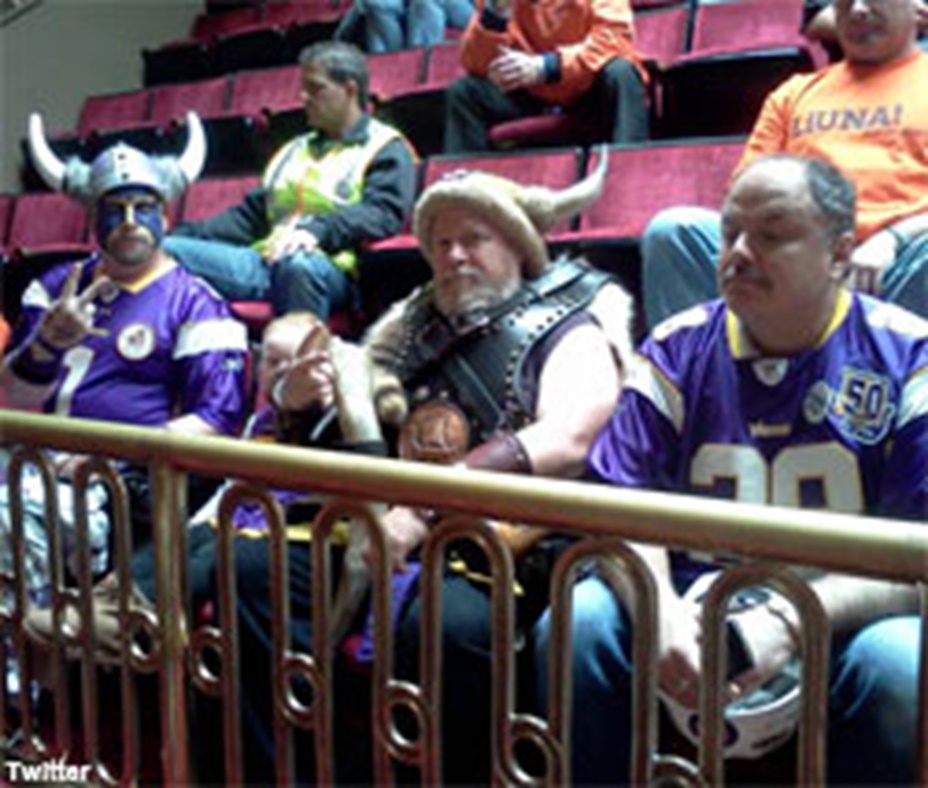
Minnesota Gov. Mark Dayton yesterday was “cheered -- and heckled" as he signed legislation for a public subsidy package to build a new Vikings stadium, according to Mike Kaszuba of the Minneapolis STAR TRIBUNE. As "smiling" team Owner Zygi Wilf watched, the crowd at the state Capitol “was dominated by fans in Vikings jerseys.” Dayton said, “These bills, that involve major public investments, are understandably controversial. They’re hotly debated. They’re closely inspected -- as they should be. That’s democracy, and that’s Minnesota.” Kaszuba notes Wilf and Minneapolis Mayor R.T. Ryback were "also heckled as they spoke” (Minneapolis STAR TRIBUNE, 5/15). John Stiles, Ryback's Communictions Dir, said that “the proposal will go before the council's Intergovernmental Relations committee May 24 for an official vote, and the council will accept the committee's recommendation the next day as a formality” (ST. PAUL PIONEER PRESS, 5/15).
BOOK KEEPING: The AP’s Martiga Lohn wrote the Vikings stadium deal “involves plenty of public participation, but it also prevents the public from getting a look at the team's finances during their partnership to build the $975 million stadium.” Critics have said that the blanket protection “goes beyond current state law, leaving taxpayers in the dark on one of the state's biggest public works projects.” Lohn noted the stadium bill creates a new Minnesota Sports Facilities Authority with members appointed by Dayton and Ryback to "vet the team’s ability to fulfill its financial commitment to build, operate and repair the stadium over 30 years.” The list of companies that bid to build the stadium “will be kept confidential until the winner is selected.” Vikings VP/Public Affairs & Stadium Development Lester Bagley said that financial information "has also been kept confidential for the Twins and other NFL teams with stadium deals.” Dayton said, “The team is obviously anxious to get going, and the clock is ticking already in getting it opened as soon as possible, so that'll be top priority for the rest of this week” (AP, 5/14).
SETTING THE TONE: SI.com’s Peter King wrote, “I think the Minnesota stadium deal should be a template for future NFL stadium deals -- assuming the stadium's not in a state like California, where there is relatively little available in the realm of public financing.” King: “Turns out the Wilfs, who own the Vikings, will end up paying 49 percent of the stadium costs ($478 million of the $975 million bill), plus 65 percent of the annual operating costs every year for 20 years” (SI.com, 5/14).