






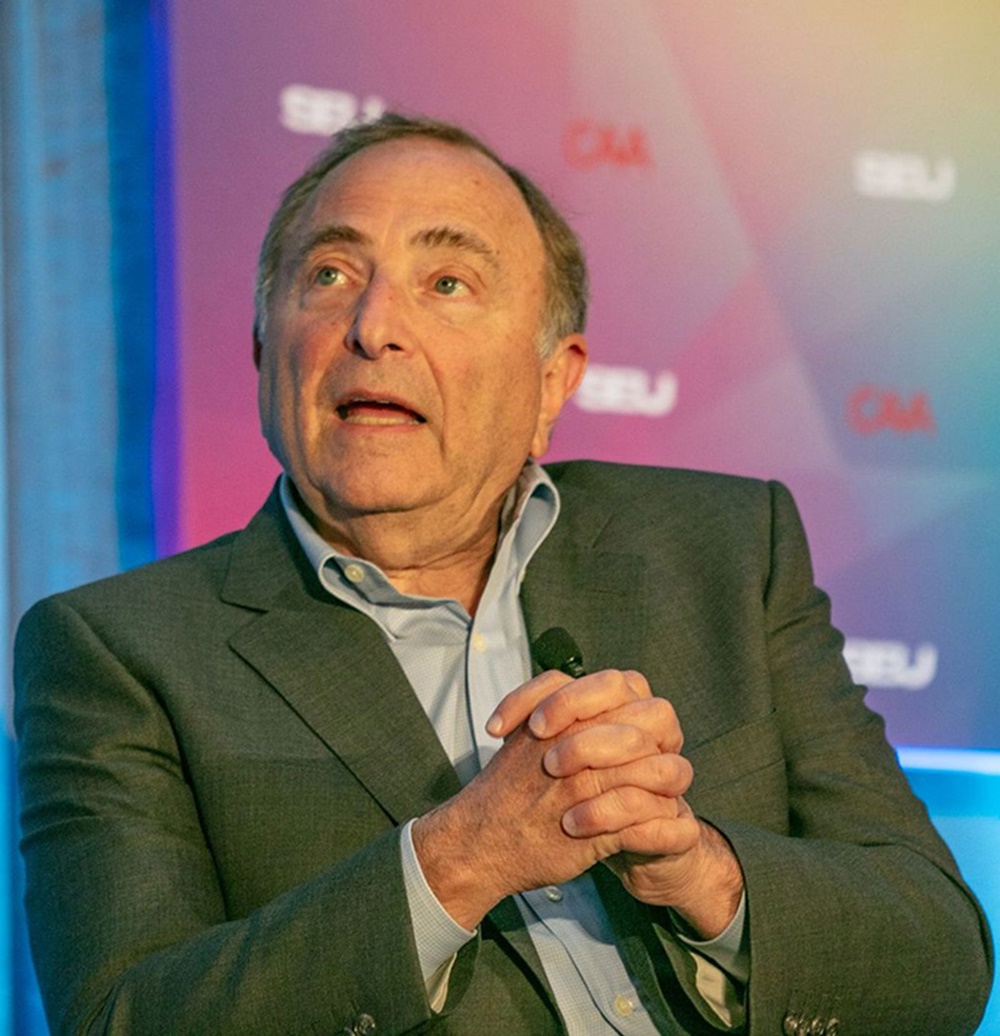







Catching Up With USOC Chairman Peter Ueberroth
The Closing Ceremony in Beijing not only marked the conclusion of the 2008 Olympics but also the final Olympics that Peter Ueberroth would attend as chairman of the U.S. Olympic Committee. Ueberroth’s term comes to an end this fall when he will transition into a non-voting role on the USOC’s board of directors. As the Beijing Games wrapped up, he sat down with SportsBusiness Journal staff writer Tripp Mickle to talk about the impact of the 2008 Olympics, the future of the USOC and the future of the Olympics.
What do you think the legacy of the Beijing Games will be?
Ueberroth: These Games are going to be an exclamation point for the full arrival of the country of China on the world scene so that it can touch all of the citizens of the rest of the world. China showed its heart in the Opening Ceremonies. It showed its culture in the Opening Ceremonies. Now, it’s showing its facilities, which are the best in the world.
Each Olympic Games has a legacy unto itself. Los Angeles is remembered for rejuvenating the Olympics, Sydney for surprising everyone. What will the Beijing Games be remembered for?
Ueberroth: The ’84 Games was remembered for rejuvenating the Olympics and China entering the Olympics for the first time, which was a small footnote in history. Now 24 years later for them to be dominant shows that if you have enough resources and dedication you can achieve a lot. That’s what these Games will be remembered for — as a turning point for China stepping forward as a worldwide dominant sports power.
What was the biggest surprise for you in dealing with the Chinese authorities in preparing for these Games?
Ueberroth: There was a fairly strong anti-American feeling. (But we’ve gone) from absolute strangers to respected friends. One of the stories that’s never been told is what Rick (Burton) and our international folks did after the earthquake — setting up a village in a week and housing 20,000 people.
How do you think Michael Phelps’ success will impact the international Olympic movement?
Ueberroth: People will begin to focus more on careers than has ever happened in the past. When Babe Ruth came in and hit 60 home runs, guys were hitting 20 and 30 and 15 and 40. But then once he broke it, it’s lasted for generations and generations and generations. People will now pay attention more to extended records of other people.
How does the U.S. Olympic Committee take the momentum from these Games and build on it in the future?
Ueberroth: It’s going to be a challenge. The network will be a big help because the idea is to take all of the sports into the American homes for parents and kids to see. Parents are younger and their kids are their focus. Taking fencing coaching into the home and also being able to remind them of the footage of the triple gold medal … will hook them.
You see the network as critical. Where does it stand?
Ueberroth: I see that as important. We’re not looking at it from a commercial success point of view. We’re looking at it as a way to fight obesity. China doesn’t have this problem. We have this problem where we’re focused on a couple of sports and the computer is competing with the playground.
Where do things stand with the network? Will it come to fruition within a time period?
Ueberroth: It has to get itself well established in the gap between now and the (2010) Winter Games.
Do you see in that period establishing a USOC network?
Ueberroth: Yes.
Do you see the existence of Universal Sports as problematic?
Ueberroth: No, I don’t.
Can they both exist and be run independently?
Ueberroth: I can’t speak to what they will and won’t do. The brand United States Olympic Committee is powerful and will do well.
How do you feel about young people following the Olympics?
Ueberroth: Not only is it a major challenge, it’s one of the goals. The generations coming up are quite different from your generation and what you were exposed to. … The world’s changing at such a fast pace. You never catch up. You just have to find your opportunities to reconnect. That’s not exclusive to the U.S. Olympic movement. That’s also applicable to baseball. It wants to be the national pastime, but I submit that football is the national pastime.
How critical is 2016 to the future health of the United States Olympic movement?
Ueberroth: It’s very important. I don’t think it’s critical. I think it’s more critical to the IOC than it is to us.
Why?
Ueberroth: The kind and quality of sponsors we have will be with us through highs and lows and good and bad times. The TOP program, which was really the model created in ’84 and handed to (former IOC President Juan Antonio) Samaranch, was brilliant. It’s really funded the Olympic movement because it tied television rights and sponsors together. Most of the IOC, they don’t understand how that all ties together. We’re working hard for them to see that. It’s not that the Games haven’t been here in a long time, it’s that they haven’t really been in a major market in the United States. By major market, I’m talking about a place where major companies are located. Chicago and New York are the two spots where you really have a lot of sponsors. You can start down our roster with United Airlines and McDonald’s and so on.
Can Chicago win the Games if the USOC and IOC don’t reach an agreement regarding revenue share?
Ueberroth: Yes. … It’s really not a revenue-share issue. It’s a restructuring.
Do you anticipate a resolution soon?
Ueberroth: I can’t put a date on it. We have to look at what opportunities and why. In the world of marketing, things need to be refreshed. The people who are particularly verbal have not devoted the time to understand what the issues are.
Your term comes to an end soon. When you reflect on your recent time with the USOC, what achievements stand out in your mind?
Ueberroth: I don’t think I can say I achieved much. I think stability is the best you could say. (Beforehand, we had) four elected leaders in a four-year period, four CEOs in a four-year period (and) weren’t a factor because no one could spell IOC. You take a look at our international group, we have people who can speak eight or 10 languages and have deep international relationships that go back years. It’s a different deal. Rick (Burton), Jim (Scherr), Norman (Bellingham) and others have created a different dialogue. USA House used to be a closet. Now whatever leadership group is there is having a private dinner. We’re not trying to be big, we’re trying to be good hosts. If anything, I’ve helped stabilize.
What will be the most memorable moment for you to date from these Games?
Ueberroth: When Lopez Lomong was elected to be the flag bearer, after his press conference, we took him in to meet with the next group. It was (USA Basketball), the NBA. We go and there are all these big guys slouched in their chairs, arms going everywhere. Coach Krzyzweski had researched and read the story of this guy. He said, “Tell them your story. Tell them about so and so. Tell them about this.” The (players) went from slouching in chairs to standing, and from standing to standing politely and from hats on to hats off. These guys, each player all of the sudden wanted to hug him. We all have tough backgrounds, but this young man’s story was incredible.


I agreed that China showed it's heart and dedicationt along with planning in the opening event. It was definately memorable. The olympic were so incredible to watch and the sports facilities were amazing.
Posted by: satrinina vernon / August 27, 2008 / 9:53 PM