|
| |
 |
|
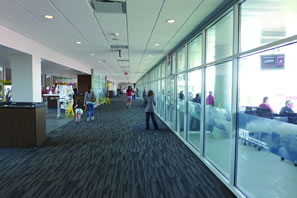 |
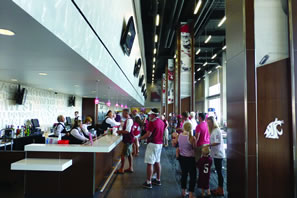
A stadium that had only six suites before the renovation
now has a full premium inventory to offer.
Photos by: WASHINGTON STATE ATHLETICS |
WASHINGTON STATE
Martin Stadium
Built: 1936
Project cost: $65 million
Renovation designer: AECOM
Last major renovation: 2007
What’s new: One of the country’s smallest
BCS stadiums has opened a new addition on
the south side with 21 suites, 1,183 outdoor club
seats, 83 indoor club seats and 42 loge boxes.
The entire project, which pushes total seating to
about 33,500, was designed and built in 17 months.
Construction started in December, a few weeks
after Washington State hired Mike Leach as its
football coach, and finished in early August, three
weeks ahead of schedule, said John Johnson, the
school’s senior associate athletic director. The
excitement surrounding the Leach hire, coupled
with a premium experience new to many fans
in Pullman — the stadium had six small suites
before the renovation — helped market the inventory,
Johnson said. “The interest and feedback
has been really positive,” he said. In total, premium
seat revenue should generate $3.1 million a
year for scholarships.
Premium seat details: Suites $50,000 annually
for 24 seats, $40,000 for 18 seats, $30,000
for 12 seats, covering cost of tickets and scholarship
donations; sold out. All club seats $300 plus  annual donations of $1,400 to $2,200 to athletic
fund; indoor club seats are sold out, and outdoor
club seats were 85 percent sold two weeks into
season. Loge boxes $15,000 annually for six seats,
$10,000 for four seats. Terms for all premium seats
are three, five and seven years.
annual donations of $1,400 to $2,200 to athletic
fund; indoor club seats are sold out, and outdoor
club seats were 85 percent sold two weeks into
season. Loge boxes $15,000 annually for six seats,
$10,000 for four seats. Terms for all premium seats
are three, five and seven years.
Financing: The school sold $80 million in
bonds to finance construction, which will be paid
off through TV revenue, among other sources.
The school also raised more than $20 million
to build a future football operations
facility.