The NFL is planning to raise the amount of debt teams can borrow to $175 million per club from $150 million, according to financial and other sources.
The move, if made, would be the first loosening of debt rules among the major sports leagues since the financial collapse of 2008.
The NFL did not confirm or deny what the financial and other sources were saying but did say that as of last week, the subject was not on the agenda for the league’s annual meeting next week. Topics can be put on the agenda on short notice.
The borrowing limit refers to how much of the franchise a club can use as collateral. The league allows other borrowing, such as for stadiums, but anything beyond $150 million currently cannot be secured by the value of the franchise without a waiver.
The NFL long has been the most financially conservative of the four major U.S. leagues, but rising franchise values and the promise of more revenue from the new media deals that take effect in 2014 appear to have the league ready to allow more borrowing.
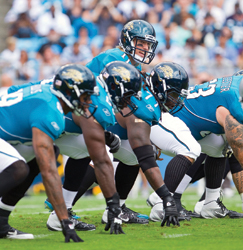 |
A higher debt limit might appeal to potential team buyers. Most recently, the Jaguars sold for $760 million.
Photo by: GETTY IMAGES
|
“Given the new 10-year collective-bargaining agreement in the NFL and franchise values rising to over $700 million, it would seem prudent to raise the debt ceiling to allow clubs to make additional investments,” said Rob Tilliss, founder of boutique sports investment bank Inner Circle Sports and the former head of sports lending at JPMorgan Chase. “These could come in the form of stadium improvements, club operations or be used for team acquisitions. Each club has its own set of needs, but I would think that many of the clubs would take advantage of the increase.”
If owners can borrow more, it also means potential team buyers can finance more, meaning they might be willing to spend more for an acquisition. The most recent sale, the Jacksonville Jaguars, went for $760 million.
One source said the league is considering raising the debt cap even further than $175 million, but that would come in stages, if at all. Tillis said given the strong revenue and valuations in the NFL, banks would not blink at the debt cap rising to $200 million. For now, though, the plan appears to go to $175 million.
Five years ago, the league tried to lower the debt cap to $125 million from $150 million. At the time, the league cited financial conditions, but the NFL Players Association protested, saying it was a way for the league to prevent teams from spending on player salaries. The NFL ultimately did not lower the debt cap.
While the league, in the buildup to last year’s lockout, did not lower the cap, it did tightly control team debt transactions and required often steep pay-downs of borrowings. The Houston Texans in particular bore the brunt of this policy, as the club was compelled to ultimately pay off all the debt team owner Bob McNair incurred in buying the club despite healthy club revenue.
McNair, ironically, is now the new chairman of the league’s finance committee, which would approve any loosening of the debt rules.