

















2011 IMG World Congress of Sports 2011 IMG World Congress of Sports 2011 IMG World Congress of Sports Industry leaders meet in California Photos from the IMG World Congress of Sports HBO leads Sports Emmy pack with 31 nominations Can sports weather storm? Lauer: Solving digital rights issues a key to wireless revolution Sports, politics collide in Beijing Johnson thinks her blueprint will serve WNBA well
Upcoming Conferences and Events
SBJ/April 3 - 9, 2006/World Congress Of Sports
Sports, politics collide in Beijing
Published April 3, 2006
Sports on the Hill
|
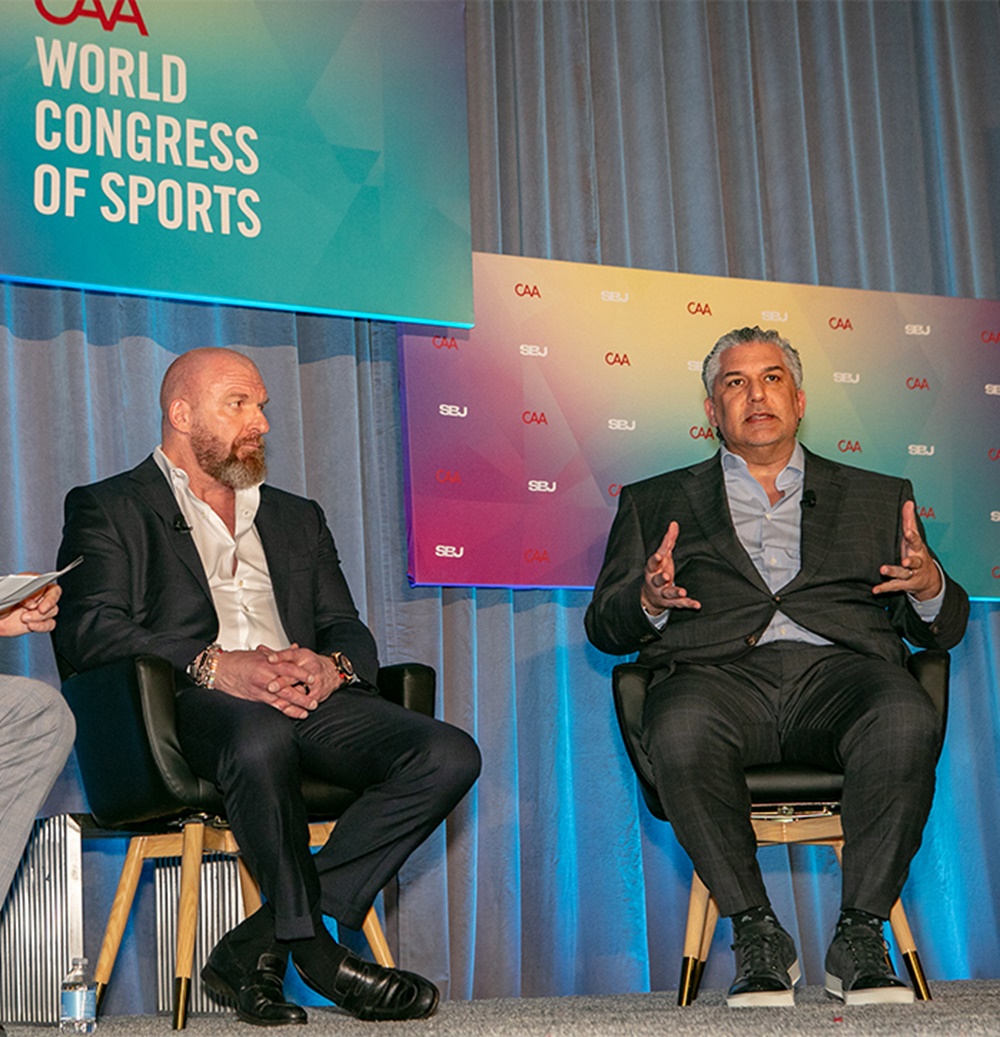
| Stan Brand (left), Lucy Calautti and Phil Hochberg address sports’ leading legal questions. |
“It’s basically the perfect storm for a lot of issues in sports and politics,” Cove said.
He predicted that politicians could use it as a time to change the Asian country’s currency regulations or fight its one-child policy, dragging into the fray everyone from sporting goods manufacturers with plants there to Olympic sponsors such as Visa and McDonald’s.
“I’m not saying that’s going to happen,” he said, “but there are so many people who are frustrated with not being able to influence public policy in the People’s Republic of China that this unique opportunity of 2008 suggests that people will probably look at it as an avenue to get that done.”
That is only one of the political issues that will challenge sports business in the future, according to a group of Washington, D.C., insiders.
A la carte cable programming is building steam on Capitol Hill, said Lucy Calautti, a senior adviser with Baker Law, and the top lobbyist for Major League Baseball.
“Don’t only watch Congress,” she said. “Watch the FCC.”
That could be bad news for sports, said longtime sports attorney Phil Hochberg. A la carte is seen in some circles as a threat to league revenue because it could trigger a decline in TV viewership. “If viewership goes down,” he said, “ad revenue goes down. If ad revenue goes down, rights and payments go down.”
Stan Brand, an attorney with Brand & Frulla, cited eminent domain as the biggest potential threat to team revenue. Limits could be set on economic development for public use after a U.S. Supreme Court decision last year in favor of eminent domain. Since then, property owners nationwide have pushed states to protect their property from being taken and redeveloped for private use.
Private development is crucial to a franchise’s ability to fund new stadiums, Brand said.
“If Congress comes in and changes that and we don’t get an exemption that creates a cocoon for the development of these projects,” he said, “that’s going to be a serious problem. It’s going to make things much more costly and much less likely to be built. We’re optimistic we’ll get some type of legislation like that.”


