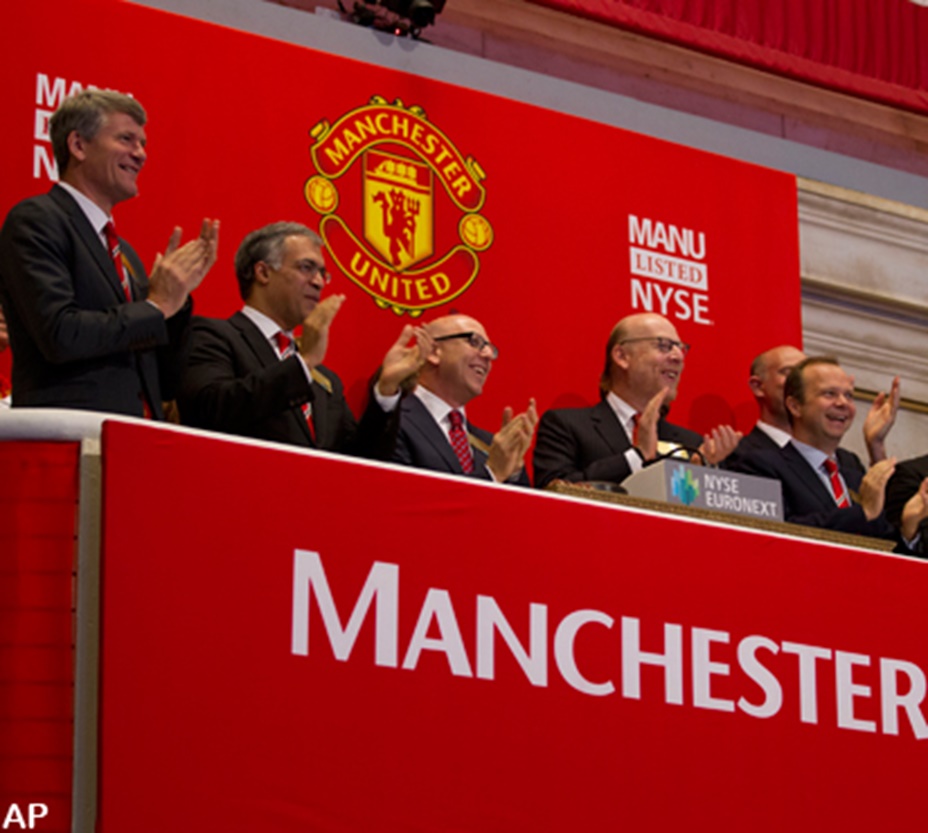
ManU has announced a "pre-tax loss of £4.7M ($7.6M) on falling revenues in the year to June," just a month after the club floated on the N.Y. Stock Exchange, according to Matthew Sparkes of the London TELEGRAPH. The loss comes after ManU reported a £12M ($19.5M) profit last year. However, a "one-off tax credit" of £28M ($45.5M) boosted post-tax profits to £23.4M ($38M). Revenue fell by 3.3% during the period to £320M ($520M). Assuming that ManU reaches the quarterfinals of the Champions League, it "predicts income of between £350M ($569M) and £360M ($585M) next year." Matchday revenue fell 10.9% to £98.7M ($160.3M) "as a result of playing four fewer home games than in the previous season." Broadcasting income dropped 11.3% to £104M ($169M) after the club was knocked-out at the group stages of the Champions League. TV broadcast rights for the Premier League are expected to bring in £1B ($1.6B) a year between next year and the '15-16 season for BSkyB and BT Vision, of which ManU "will receive a share" (TELEGRAPH, 9/18).
LOOKING UP: In London, Roger Blitz wrote that "the damage was done in the fourth quarter" when revenues fell 25.4% compared with the same period last year. That decline "reflected the club's relatively poor performance" last season when it did not win a trophy for the first time since '05. Comparatively, ManU reached the Champions League final and FA Cup semifinals in '10-11 (FINANCIAL TIMES, 9/18). BLOOMBERG's Tariq Panja reported that ManU’s sales "are among the highest" in football, doubling since the Glazer family bought the team. The club "reorganized its commercial sales operation" in '08, and since then revenue from sponsorship has risen to more than £100M ($162M) a year. That number "will be boosted" after ManU signed a record $559M ($908M) jersey sponsor agreement with General Motors' Chevrolet brand in August. ManU Commercial Dir Richard Arnold said Aug. 16, “We’re only getting started in this area of our business” (BLOOMBERG, 9/18).
SHORTING THE SYSTEM: In London, Richard Blackden reported that almost 11% of ManU shares sold in a £1.8B ($2.9B) flotation last month are "now in the hands of investors looking to profit from a slide in the company’s stock," a practice referred to as "shorting." That amount has "more than doubled" from the days immediately after the IPO in N.Y. The number of shares shorted "will add to some fans’ concern over the flotation." Financial services company Markit Analyst Simon Colvin said, "It’s a story that is interesting to short sellers. People have ingested the current situation of a highly leveraged sports team that is open to the whims of the football season. Short-sellers borrow shares and then sell them in the hope the price will fall. They make money by buying back the shares at a lower price, returning the shares to the original owner and then pocketing the difference" (TELEGRAPH, 9/18).