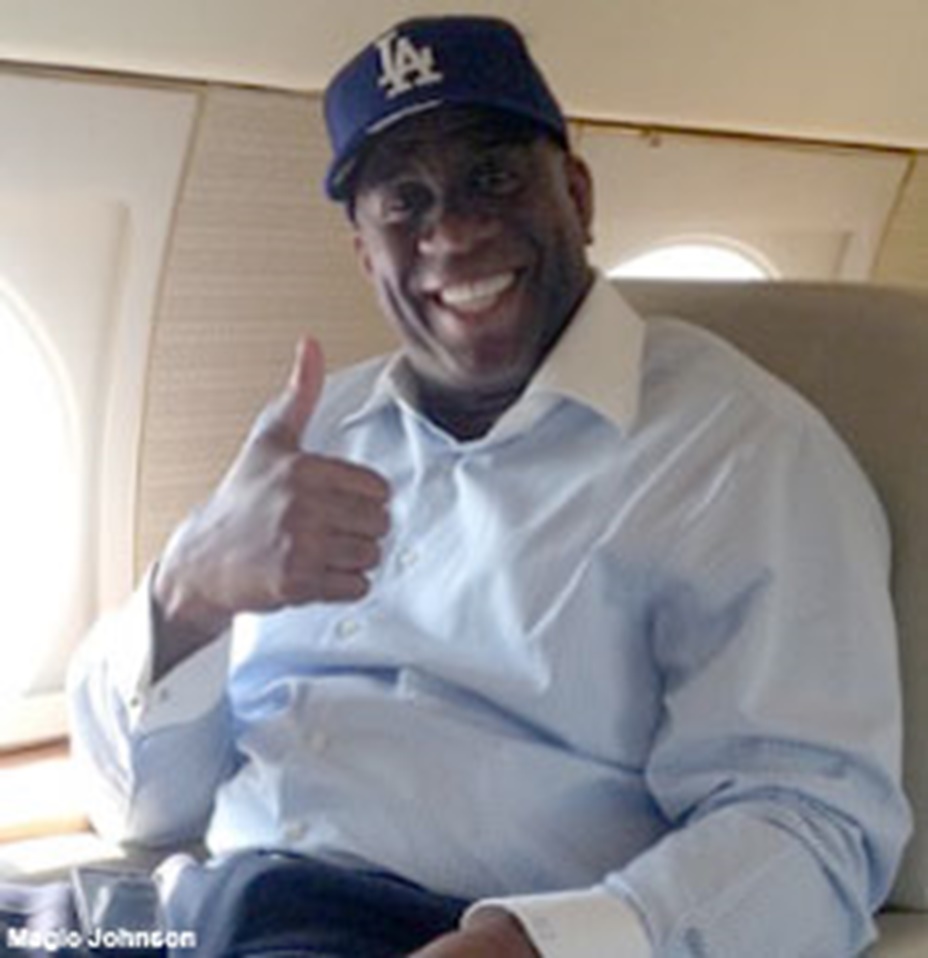
The $2.15B sale of the Dodgers to the Magic Johnson-Guggenheim Partners group was a "cash deal that will not add to the team's debt load but could lead to a payoff" of as much as $1B for former Owner Frank McCourt, according to sources cited in a front-page piece by Shaikin & Wharton of the L.A. TIMES. The purchase price includes about $1.6B for the team and about $400M "that will go toward paying off debts incurred by the struggling organization." In addition, the new Dodgers Owner Guggenheim Baseball Management and McCourt will "enter a joint $150-million venture to control the parking lots surrounding the stadium." Sources said that SAC Capital Advisors Founder and Mets investor Steven Cohen along with Lakers investor Dr. Patrick Soon-Shiong offered $1.35B to purchase the Dodgers. The initial bids from Rams Owner Stan Kroenke and the Guggenheim Partners "were about $1.5 billion and $1.6 billion, respectively." When the Guggenheim partnership "kicked its offer to $2 billion, the bidding was abruptly over." Court documents indicated that the team has "piled up $573 million in debts and about $200 million in tax liabilities." With the parking lot venture and McCourt's divorce settlement with ex-wife Jamie figured in, McCourt -- who "bought the team in a highly leveraged deal for $430 million in 2004 -- could clear roughly $1 billion." With Time Warner Cable, Fox and others expected to show interest, experts predict that the Dodgers, whose current TV contract "runs through the 2013 season, could attract as much as $4 billion for their next deal, if the franchise is willing to sign a long-term contract." The team could also "start its own regional sports network -- or leverage the threat to do so in order to drive up the bidding" (L.A. TIMES, 3/29). Meanwhile, in N.Y., Josh Kosman cites sources as saying that the Jackie Robinson Foundation, created by Robinson's widow, Rachel, in '73, "is a partner" in the Dodgers ownership group. Rachel Robinson "will sit on the Dodgers board of directors" (N.Y. POST, 3/29).
SELIG GIVES DEAL HIS BLESSING: MLB Commissioner Bud Selig yesterday gave his blessing to Guggenheim Baseball Management's purchase of the Dodgers. Selig in a statement representing the league's first public comment on the deal called the sale "extraordinarily exciting" and "a profound illustration of the great overall health of our industry." Franchise asset value escalation has been one of the primary measures Selig has encouraged others to use to measure his performance. Selig additionally lavished praise on Johnson, one of the leaders of the Guggenheim group, calling him a "living embodiment of so many of the ideals that are vital to our game and its future." Selig's effusiveness likely goes a long way toward eliminating any potential league-related hiccups as the deal heads toward completion. Though the sales price is well in excess of the general range approved late Tuesday by MLB owners, Selig's comments signaled that the Guggenheim deal structure will still find favor with existing team owners. The U.S. Bankruptcy Court is set to approve the sale April 13, with league approval slated to occur during the month as McCourt is due to close the deal by April 30. Selig in his comments made no specific reference to McCourt but thanked "the great Dodger fans for their loyalty and patience" during the fractious bankruptcy saga (Eric Fisher, SportsBusiness Journal).
QUESTIONS ABOUT THE PRICE: ESPN L.A.'s Arash Markazi noted several sports economists believe that Guggenheim Baseball Management "paid close to twice as much for the team than it is actually worth and question the viability of the deal." Prior to the sale, several economists believed that the Dodgers sale "would surpass the $845 million the Chicago Cubs sold for in 2009, which was the most ever for an MLB team." Most figured that it would "be around the $1.1 billion figure the Miami Dolphins fetched three years ago." Univ. of Michigan sports management professor Mark Rosentraub said, "It's the craziest deal ever; it makes no sense. That's why you saw so many groups drop out. ... It doesn't make business sense. Nobody came up with this number." Markazi noted one of the "biggest reasons the Dodgers sold for $2 billion is the regional sports network battle being waged in market between Fox and Time Warner." The Angels in December agreed to a new deal with Fox worth at least $3B over 20 years, and the Dodgers are "expected to sign a similarly lucrative deal with Fox or Time Warner." Smith College sports economist Andrew Zimbalist said, "One of the things that Selig was trying to avoid when he did not authorize the contract between McCourt and Fox was he thought McCourt would take the money and pocket it instead of using it to build the Dodgers. That indirectly will happen anyway because McCourt is going to get his money and the new ownership will have to use a good chunk of the television money to pay off their asset purchase." Rosentraub said, "If you take the Fox deal or try to start your own network that's going to eat down your capital cost and you've just lost a huge share of revenue" (ESPNLA.com, 3/28). Meanwhile, in N.Y., Madden, Thompson & O'Keeffe cite sources as saying that several MLB owners were "less than thrilled with the purchase" of the Dodgers by Guggenheim Baseball Management. Yankees President Randy Levine yesterday asked a question "that was surely on the minds of many club owners: What does the sale mean for the rest of the league?" Levine said, "It's an incredible price and one can only wonder what the Yankees are worth" (N.Y. DAILY NEWS, 3/29). The N.Y. Daily News' Bruce Murray said, “Just when you think the price of a franchise can't go up, you get staggered with the latest one. I mean, if they’re worth $2 billion, I would think the Yankees are worth $4 billion. The Mets would be worth $3 billion, who knows” ("Daily News Live," SportsNet N.Y., 3/28).
THE MONEY BEHIND THE BID: In L.A., Hamilton & Reckard note Guggenheim Partners "capitalized in recent years on the travails of large investment banks, which were pounded during the 2008 financial crisis by bad investments and even worse public relations." Guggenheim Partners was launched 12 years ago as an investment management firm and since then has "gobbled up a range of properties." It is also a "big player in commercial real estate debt." Guggenheim Partners' "biggest hire" was CEO and new Dodgers controlling Owner Mark Walter, the former CEO of Bear Stearns. Walter said of the group's purchase, "The market drove the price. It's a multi-generational thing my daughters' granddaughters will own." Walters added that he "doesn't feel compelled to recoup the investment immediately." He also "sidestepped questions about the financial merits of the deal." He said that there are "no current plans to develop the land surrounding Dodger Stadium ... though he was coy about the prospects for launching a regional cable TV Network" (L.A. TIMES, 3/29). REUTERS' Sue Zeidler noted Walter "shuttles between New York and Chicago, where he is seen frequently at Cubs games with his young daughter." A source said that Walter "still plans to keep his season tickets for the Cubs, but will soon find a residence" in L.A. (REUTERS, 3/28). Walter said yesterday, "We're very fortunate. We've had success, and that's given me an opportunity to own one of the most storied franchises in America. I hope my daughter and one day my granddaughters will be at Dodgers Opening Day. I just saw it as a once-in-a-lifetime opportunity" (CHICAGO TRIBUNE, 3/29).
THE MAGIC FACTOR: In L.A., Roger Vincent notes Johnson's "purchase of part ownership of the Dodgers is the latest step in one of the most successful postgame careers of any professional athlete." Former Johnson Development Corp. President Ken Lombard, who mentored Johnson in his transition from basketball to business, said, "He is an extraordinary businessman who has done a great job of executing his strategies." Johnson's strategy has included "immersing himself in the minutiae of real estate development and other business issues while linking up with top players in various industries." Lombard said that it was Dodgers Partner Peter Guber, who also serves as Warriors co-Owner and Mandalay Entertainment Group Chair & CEO, who "greenlighted the development of Magic Johnson Theaters at Baldwin Hills Crenshaw Plaza" in the mid-'90s. Former L.A. Mayor Richard Riordan said that Walter, Guber and Dodgers co-Owner Stan Kasten "made a wise move by joining Johnson in the deal for the Dodgers -- as long as they don't mind his taking the spotlight." Riordan said, "The guy that is putting up all the money has got to have a lot of humility to do it this way because nobody is going to remember his name. They are going to remember Magic Johnson's name" (L.A. TIMES, 3/29). Former Dodgers Owner Peter O'Malley said, "What I really like about Magic's involvement is that Magic is so popular here in Los Angeles. ... He's not going to do anything at all to let down or disappoint the fans. His commitment to living here and working here is important" (L.A. TIMES, 3/29).
MONUMENTAL MOMENT: ESPN’s Stephen A. Smith said Johnson having an ownership role in the Dodgers is "one of the great moments in history." Smith: "To have someone of African-American descent actually be an owner is a very, very big deal. For a long time it was considered ‘The Clique,’ old boys club, where we never seemed quite invited. ... When you have an owner of Magic Johnson’s magnitude that’s front and center, it talks about and it really highlights how far baseball has come” (“First Take,” ESPN2, 3/28). ESPN's Michael Wilbon said a minority owner like Johnson “represents something that was unthinkable not so many years ago." Wilbon: "There are limited partners and other African-American owners in baseball, but none that have the cache of Magic Johnson” ("PTI," ESPN, 3/28).
GUBER CONTINUES TO EXPAND PORTFOLIO: In L.A., Steve Zeitchik notes Guber in recent years "has been expanding into sports" via Mandalay Sports Entertainment -- in addition to the Warriors, Guber owns a "host of minor league baseball teams." He will "not have to divest of his minor league teams as a result of a Dodgers deal" (L.A. TIMES, 3/29). But KNBR-AM's Brian Murphy asked, "What the hell is this guy doing buying the Dodgers!?" Murphy: "How can you have a guy trying to make the Warriors better also trying to make the Dodgers better? This is a major Bay Area cognitive dissonance moment.” CSNBayArea.com's Ann Killion noted Guber is exploring building an arena for the Warriors "next door" to the Giants' AT&T Park, "so he’s not going to do anything to piss them off too much, and probably will be on their side when it comes to territorial rights because he wants to share their space with them.” Meanwhile, Killion added that now that the Dodgers are sold, “maybe somewhere that front burner is open now for the A’s” to get their stadium issue resolved" ("Chronicle Live," Comcast SportsNet Bay Area, 3/28).
UNLIKELY WINNER: FORBES' Mike Ozanian wrote if McCourt’s sale of the Dodgers "holds up, he will become the most financially successful owner of a team" in MLB history. Ozanian: "No sale of a baseball team that I have reviewed comes close to yielding as high a return. Even recent deals, enhanced by the increase in value of baseball’s local television rights, have generated returns that are paltry compared with McCourt’s return" (FORBES.com, 3/28). ESPN's Tony Kornheiser said, "Everyone in Los Angeles hates him and they stopped going, and he turns around in a recession and sells it (for $2B)." Kornheiser: “Let me know how such a thing is possible” ("PTI," ESPN, 3/28). ESPN Radio’s Scott Van Pelt, “Does this mean I can buy a team using basically no money down, run it into the ground and then get $2 billion bucks. If so, where do I sign?” ESPN’s Ryen Russillo: “This has to sting for those who go about it the right way.” Russillo said McCourt “walks away a total winner in what seemed like was an inevitable loser situation” (“The Scott Van Pelt Show,” ESPN Radio, 3/28).